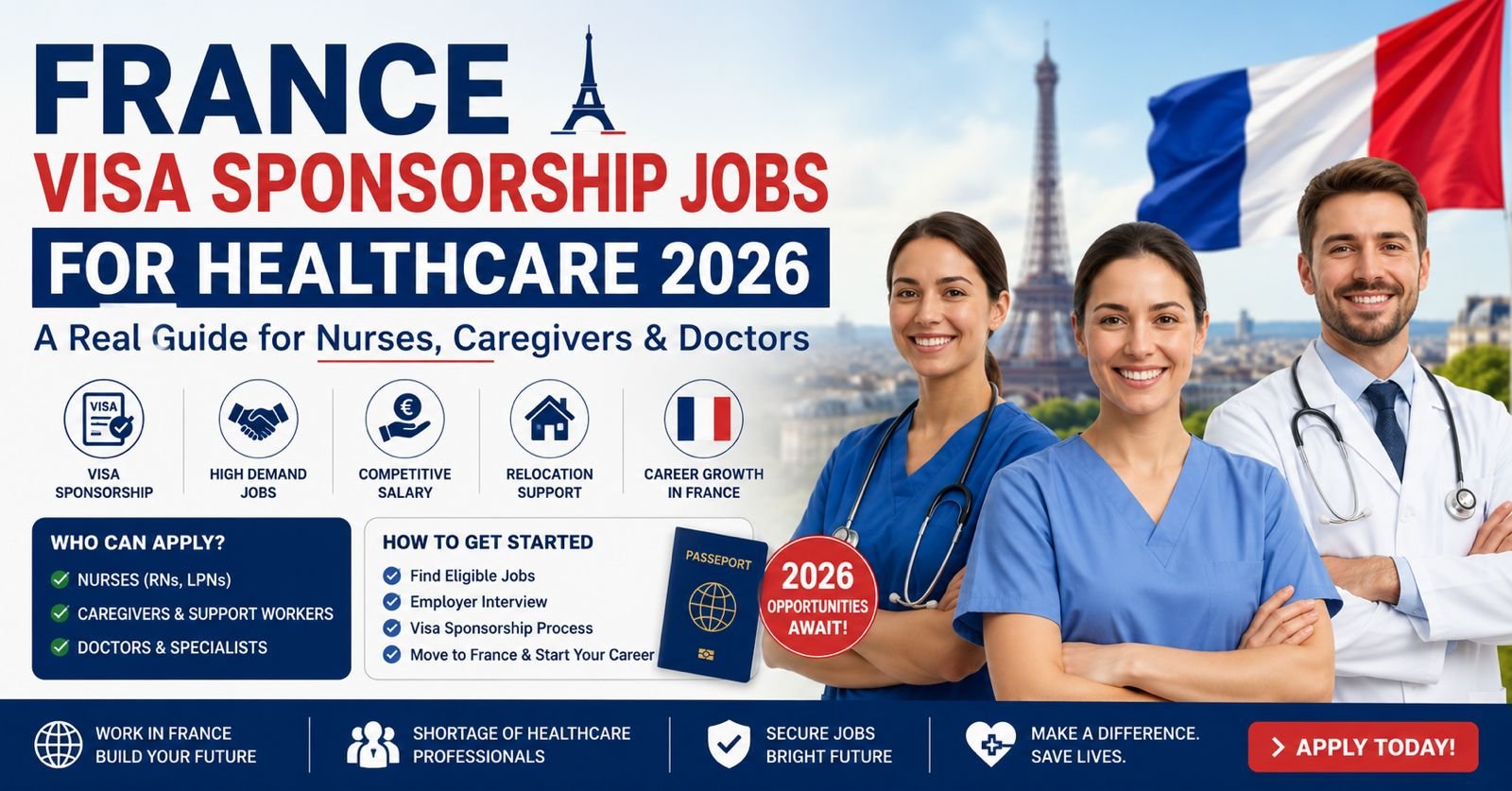
If you’re in healthcare and thinking about working abroad, France is quietly becoming a solid option for 2026. The country has a real shortage of nurses, caregivers, and support staff. Hospitals, clinics, and elder care homes are hiring from outside the EU and they’re offering visa sponsorship because they have to.
Here’s what you need to know, without the fluff.
1. What kind of jobs are actually open
France needs hands-on staff more than fancy titles right now. The biggest demand in 2026 is for:
- Registered Nurses / Infirmiers: Hospitals in Paris, Lyon, Marseille, and smaller towns are hiring. You’ll need your nursing degree + French B2 level.
- Caregivers / Aides-soignants: Elder care homes and home care agencies hire a lot. French A2-B1 level is often enough to start, and they’ll help you improve.
- Medical Technicians, Physio Assistants, Lab Staff: Less competition than nursing, but still good demand.
- Doctors: Yes, but tougher. You have to pass the ECNi exam and your degree needs recognition. Takes time, but hospitals do sponsor visas once you clear it.
Sponsorship means the employer files paperwork for your “Talent-Passport” or “Salarié” work visa. They handle most of it. You just provide documents.
2. Salary & benefits – what’s realistic
Nobody gets rich overnight, but it’s stable money. 2026 estimates:
- Caregivers: €1,500 – €1,900/month gross. Night shifts pay more.
- Nurses: €2,200 – €2,800/month gross depending on experience + city.
- Doctors: €4,000+ once fully licensed.
Benefits are the real win: public healthcare for you + family, 5 weeks paid leave, pension, and paid French classes in many hospitals. Housing allowance is sometimes included outside Paris.
3. What do you actually need to qualify
Be honest with yourself on these 3 things:
- Degree + Experience: Nursing diploma, medical degree, or caregiver training. 1-2 years experience makes hiring way easier.
- French Language: This is non-negotiable. For nurses it’s B2 on TCF/TEF exam. For caregivers, A2-B1 can work to get in, but you’ll need B1 within 1 year. Duolingo won’t cut it.
- Documents: Degree attestation, police clearance, medical fitness. France is strict about paperwork.
Agencies like AP-HP, Orpea, Korian, and regional hospitals post sponsored jobs directly. Avoid “consultants” asking for $5000 upfront. Real employers don’t charge you for sponsorship.
4. How to apply without getting scammed
Skip the random Facebook posts. Go direct:
- Check AP-HP Careers for Paris hospitals. They run international recruitment.
- Look at France Travail – the official job portal. Filter “Contrat avec prise en charge visa”.
- Target big elder care groups: Orpea, DomusVi, Korian. They hire 1000+ caregivers every year and have visa teams.
- Get your French certificate first. Even A2 helps your CV stand out.
Interview is usually on Zoom. They’ll test basic French + clinical knowledge. If they select you, they send a “convention d’accueil” and you apply for visa at the French embassy.
Final Thought
France won’t be a shortcut like the Gulf. The language barrier is real and the first 6 months will feel slow. But if you stick with it, you’re building something long-term. Public healthcare, family benefits, and a path to permanent residence after 5 years.
2026 is a good year to try because the shortage is getting worse, not better. Start French now. Get your documents attested. And apply direct to hospitals instead of paying agents.
If you’re serious about healthcare abroad, France is one of those “hard start, stable life” countries. Just don’t expect it to happen in 2 months. Plan for 6-12 months from first application to landing in Paris or Lyon.