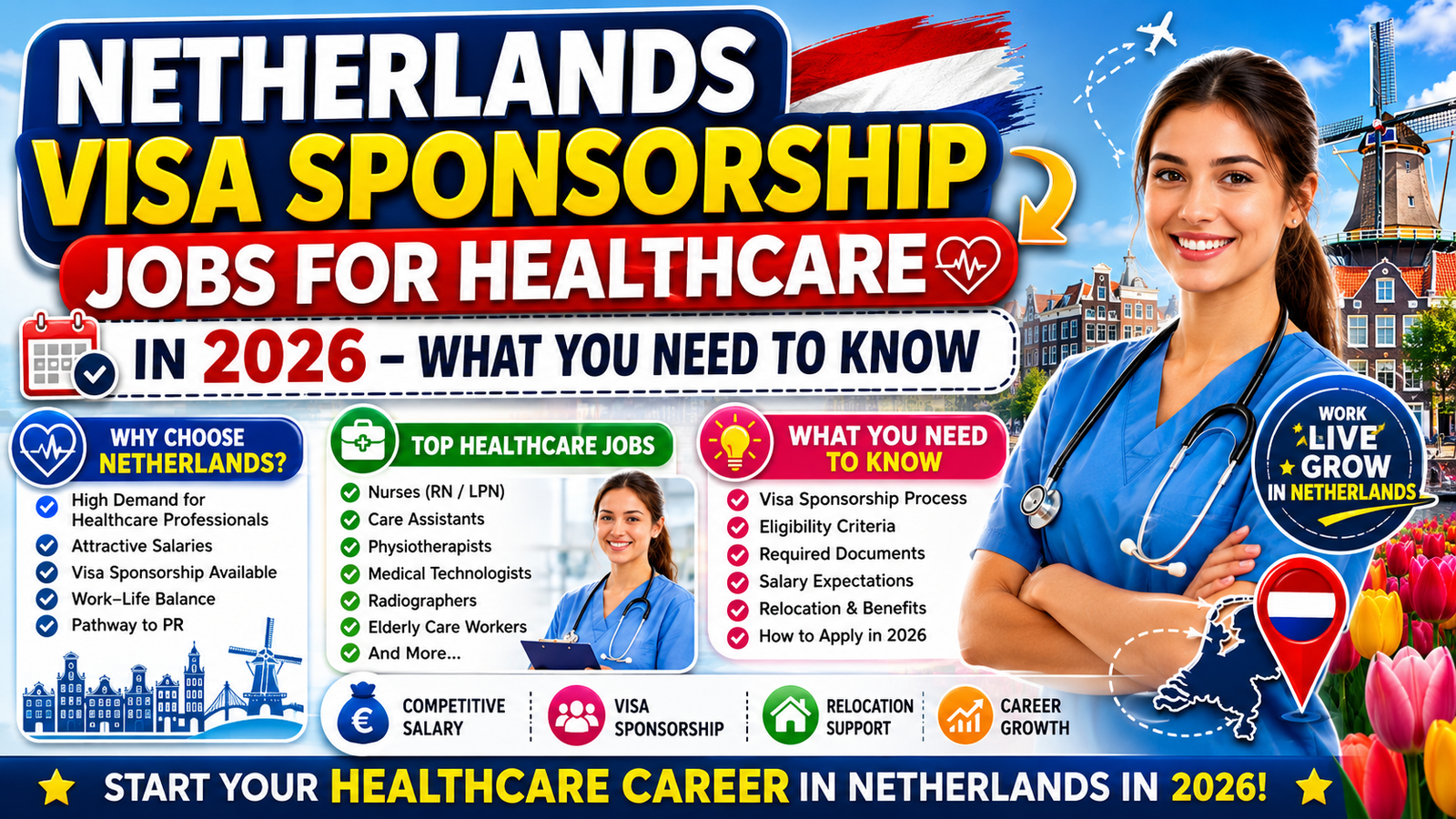
If you’re a nurse, caregiver, doctor, or healthcare assistant looking to work abroad, the Netherlands is opening its doors wider in 2026. The country has a serious shortage of healthcare staff, and hospitals, nursing homes, and home-care agencies are now actively sponsoring visas for foreign workers.
Here’s the straight talk on how it works.
Why the Netherlands needs you in 2026
The Dutch population is aging fast. By 2030, 1 in 4 people will be over 65. That means more patients, more care homes, and not enough local staff to handle it. The Dutch government calls this the “care workforce gap”. Hospitals in Amsterdam, Rotterdam, Utrecht, and even smaller towns like Groningen are posting jobs with full visa sponsorship because they simply can’t fill shifts locally.
Jobs in demand: Registered Nurses, Elderly Care Assistants, Physiotherapists, Radiographers, Lab Technicians, and General Practitioners. Caregiver and nursing assistant roles have the most sponsorships because the entry barrier is lower.
Visa sponsorship – how it actually works
The Netherlands uses the “Highly Skilled Migrant” and “Intra-Company Transfer” routes, but for healthcare the main one is the GVVA combined work and residence permit.
Good news: In 2026 most healthcare employers are “recognized sponsors” by the Dutch Immigration Service IND. That means:
- They handle your visa paperwork – You don’t pay IND fees, the employer does.
- No labor market test – They don’t have to prove no Dutch person can do the job. Shortage occupation list covers you.
- Salary + relocation – Many hospitals offer €2,400-€3,800/month for nurses, plus flight tickets and initial housing.
You will need: A valid nursing degree, registration with BIG Register if you’re a nurse/doctor, basic Dutch A2 level for most jobs, and a clean background check. Agencies like TTM Healthcare, WerkenbijZorg, and Dutch hospitals themselves post these roles on http://Indeed.nl and http://Zorgvacatures.nl.
Salary and life there
Starting salary for a foreign nurse: €2,600-€3,200 gross per month. Care assistants: €2,200-€2,500. After tax, rent, and insurance, you can still save €600-€900/month. Healthcare is top-class, work hours are 36 hours/week, and you get 25+ vacation days. The biggest challenge is learning Dutch. B1 level is required within 2-3 years for permanent registration, but A2 is enough to start.
How to apply without getting scammed
- Only apply through hospitals or agencies listed on IND’s “recognized sponsors” register.
- Never pay money upfront for a “visa fee”. Real sponsors never ask for that.
- Prepare your documents: degree, experience letters, IELTS/OET for English, and start Dutch classes on Duolingo or Babbel now.
- Timeline: From interview to visa, expect 3-5 months.
Final thought
Working in Dutch healthcare in 2026 isn’t just about a visa. It’s about job security, respect, and a system that actually values caregivers. The Netherlands is spending billions to fix its care gap, and foreign workers are part of the plan. If you have the skills and patience to learn the language, this is one of the most stable routes to Europe right now.
Don’t wait for “perfect English” or “perfect Dutch”. Start applying. The shortage is real, and hospitals are hiring real people, not just CVs. If you’ve been thinking about it, 2026 might be your window.