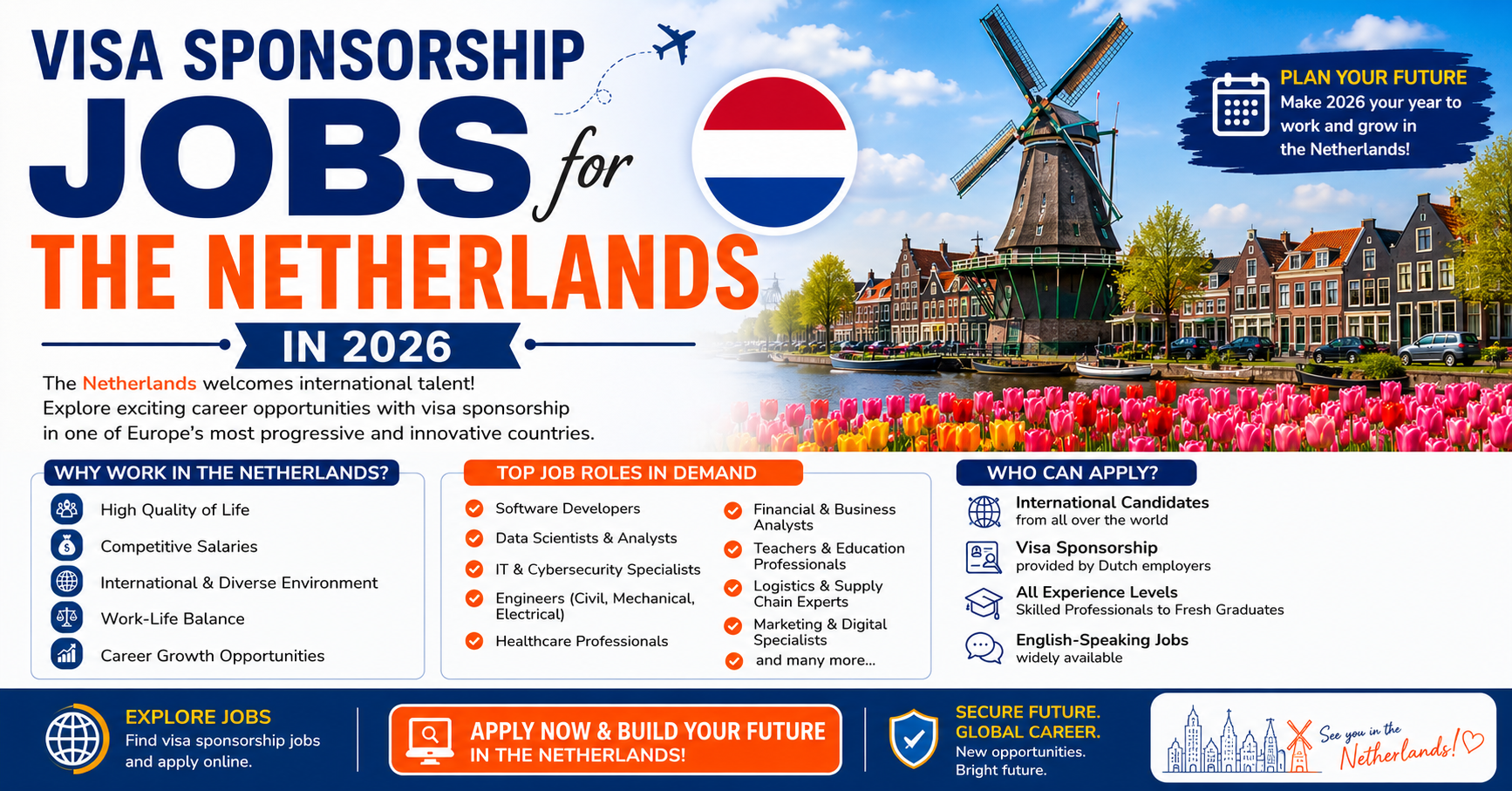
Why the Netherlands Still Hires from Abroad
The Dutch labor market has been running short on skilled people for years, and 2026 looks no different. Tech, healthcare, engineering, and logistics all have gaps that local hiring can’t close fast enough. Because of that, a lot of mid-sized and large companies are registered sponsors. That means if they offer you a job, they can handle the work permit process for you.
Where the Openings Are
Tech is still the easiest entry point. Amsterdam, Eindhoven, and Rotterdam have a steady flow of roles for software developers, data engineers, AI specialists, and cybersecurity folks. Most teams operate in English, so you don’t need to be fluent in Dutch to start.
Outside of tech, hospitals, port authorities, and manufacturing firms keep posting roles with sponsorship. Nurses, mechanical engineers, and supply chain managers are in demand. Finance and fintech roles in Amsterdam also come up regularly, especially for people with experience in risk, compliance, and data analysis.
How the Sponsorship Process Works
You can’t apply for the Highly Skilled Migrant visa yourself. The company has to be a recognized sponsor and file the paperwork once you accept an offer. For 2026, the income threshold went up slightly, but it’s lower if you’re under 30.
A lot of hires also qualify for the 30% tax ruling. That lets you receive 30% of your gross salary tax-free for up to five years, which makes a real difference in take-home pay.
Advertisement