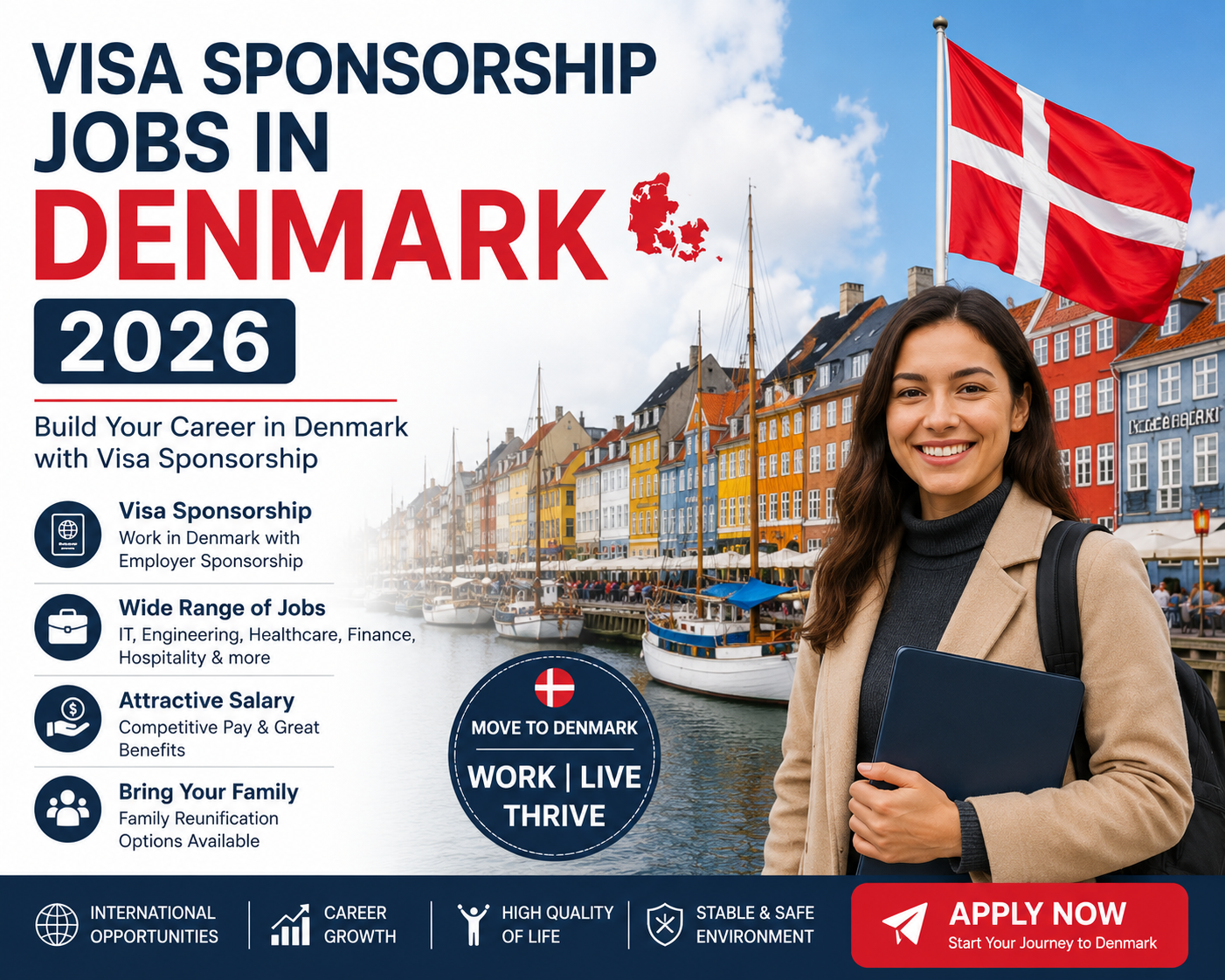
If you’ve been applying for jobs in Europe and hitting a wall on visa sponsorship, Denmark is still one of the places where it’s straightforward if your skills match what they need. The Danish government publishes an official “Positive List” twice a year, and that’s what employers use to hire from outside the EU without extra red tape.
For 2026, the January update is live, and it’s worth checking before you spend months applying to the wrong roles.
The jobs companies are actually sponsoring in 2026
Denmark splits the list into two: one for people with university degrees, and one for skilled trades. Here’s what’s on it right now:
Tech and Engineering
Software developers, cloud engineers, data engineers, and IT security consultants are still on the higher education list. Copenhagen and Aarhus have most of these jobs, and English is the working language in almost every team.
On the engineering side, civil engineers and electrical/energy engineers are in demand because of Denmark’s wind energy projects. Companies like Ørsted and Vestas hire internationally for these roles regularly.
Healthcare
Registered nurses, physiotherapists, and medical lab technicians remain short. You’ll need your qualifications approved by the Danish Patient Safety Authority, but once that’s done, the visa process moves fast.
Skilled Trades
Electricians, service electricians, electronics technicians, and plumbers are on the skilled work list. Construction firms and maintenance companies sponsor these roles year-round, especially outside Copenhagen.
Business and Finance
Accountants, financial controllers, and business analysts were added back in 2025 and are still there for 2026. Most openings are in Copenhagen.
Salaries for these roles usually sit between €55,000 and €90,000 a year. If you’re going through the Pay Limit Scheme instead, the minimum for 2026 is DKK 552,000 per year, about €74,000.
How the visa works without the jargon
If your job is on the Positive List and you have a job offer, you apply under the Positive List Scheme. Your employer doesn’t need a special sponsor license. They just need to be a registered Danish company and pay you the Danish market rate.
What that gives you:
- Processing in about 4 to 6 weeks
- No labor market test, so the company doesn’t have to prove they couldn’t hire a Dane
- A work and residence permit tied to your job
- A path to permanent residency after 4 years if you meet the language and integration requirements
The application fee for 2026 is DKK 6,810.
Where to find real jobs with sponsorship
Skip the generic job boards. Danish companies that hire internationally usually post here:
- WorkinDenmark.dk – This is the official portal. Every job here is from an employer used to hiring from abroad.
- Jobindex.dk and The Hub – Filter for English and scan for “visa sponsorship” in the description.
- LinkedIn – Search “Denmark visa sponsorship” and sort by the last month. Hiring managers often say it upfront.
When you apply, say it directly in your cover letter: “I require visa sponsorship.” Danish recruiters prefer that over vague applications. It saves everyone time.
A few things you should know before you apply
Copenhagen is expensive, especially rent. Most people who move for work end up living in Aarhus, Odense, or Aalborg where costs are lower and commutes are short.
You don’t need Danish to get hired. Almost every tech and engineering team works in English. But if you want permanent residency later, you’ll need to pass a Danish language test, so most people start classes in their first year.
Work culture is low-pressure compared to the US or UK. The standard week is 37 hours, overtime is rare, and managers expect you to leave on time.
Final thought
Denmark won’t sponsor you just because you apply. But if your job is on the 2026 Positive List, your odds are better here than in most other EU countries. The market is smaller, so there’s less competition, and employers are used to relocating people.
Check your job title on the official SIRI website under “Positive Lists” before you apply. If it’s there, focus on 15 to 20 targeted applications instead of blasting out 200 generic ones. That’s what actually gets a response in Denmark.
If you tell me your role and experience, I can check if it’s on the list and point you to the right companies to target.